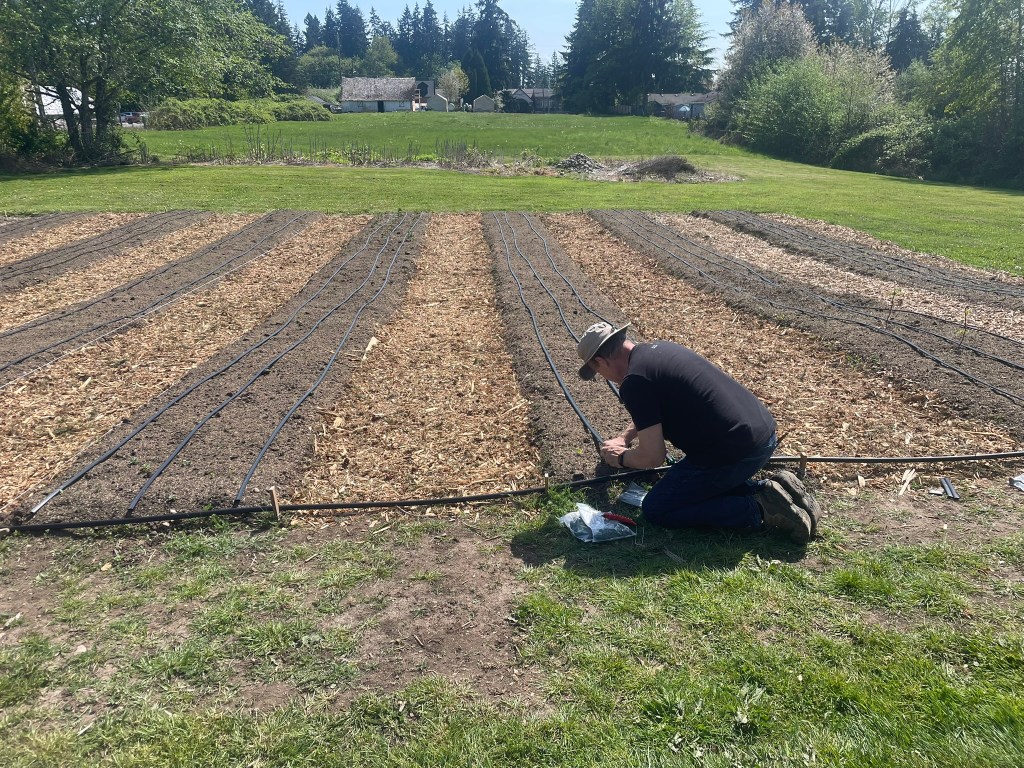
Last year, I watered by hand and with a sprinkler. And with the vague hope that clouds might take pity on me.
It wasn’t the best plan.
Overhead watering has its downsides: leaf mildew, water loss, weed encouragement… but the real problem was time. I didn’t have enough of it. And what I did have, I spent dragging hoses around instead of actually gardening. The weeds took that personally.
Boy, did they flex.
This year, Dean did some online digging in the way only he does. A lot of digging. He dove into fittings, flow rates, filtration. He read irrigation blogs. He watched about ten thousand YouTube videos. He measured things. He asked me how I wanted to do things. He made a spreadsheet. He made a diagram.
And then he bought a kit called “Small Farm.”
Because nothing says “I love you” like 1,200 feet of irrigation tape and a weekend with barbed connectors.
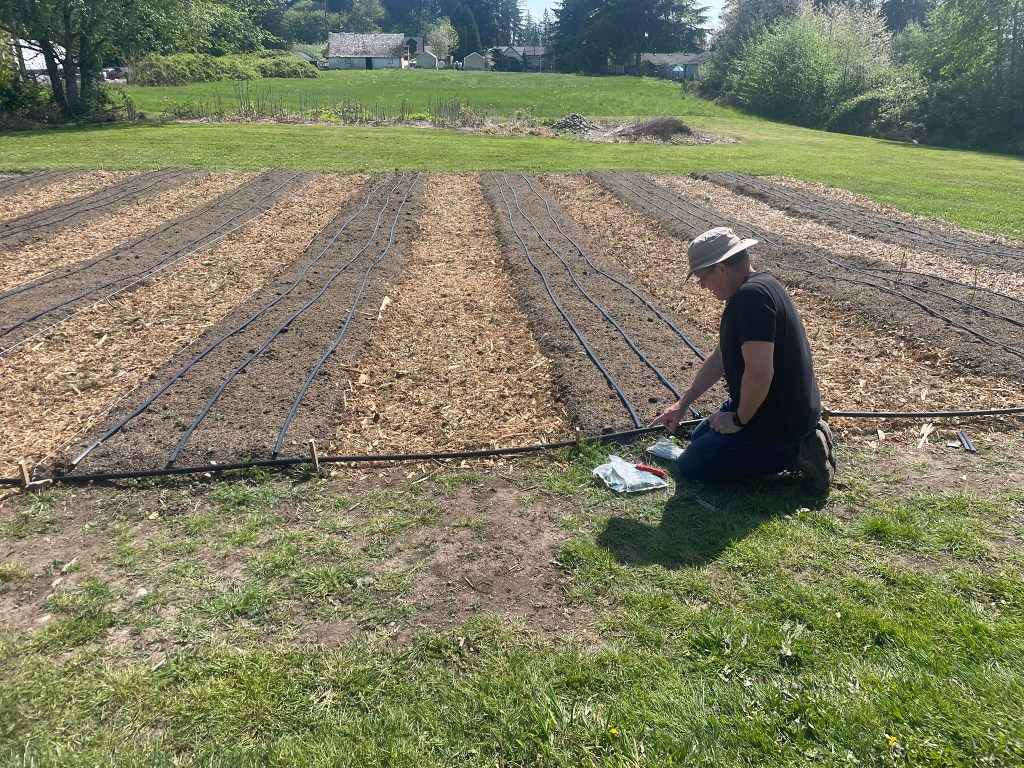
The Setup
It’s a drip system. Long tapes run along the rows, tucked neatly beside the plants, delivering water right to the roots. No splash, no wasted water, no wet leaves. Just hydration where it counts.
It’s elegant in its simplicity:
- One main hose feeds into a filter
- From there, it splits into a set of manifolds for each row
- Each row gets three length of drip tape
- Each manifold has a shutoff valve
It looks like a Small Farm. It feels like a big relief. I will be weeding and harvesting, not watering.
The Results
Watering now takes about 2 minutes of active time. The soil stays consistently moist. The plants are happy. The weeds are less happy.
And I get to garden. Not just maintain. Not just battle. I get to weed, harvest, and notice things. Trim leaves. Check for pests. Drink a cup of coffee while watering happens without me, and better than I would do.
What’s Next
- Mulch around the lines to help retain moisture
- Weed
- Do something incredibly nice for Dean
The best gifts aren’t fancy or sparkly or wrapped with bows. Sometimes, they’re efficient, functional, and smell faintly of rubber hose.

Leave a comment