
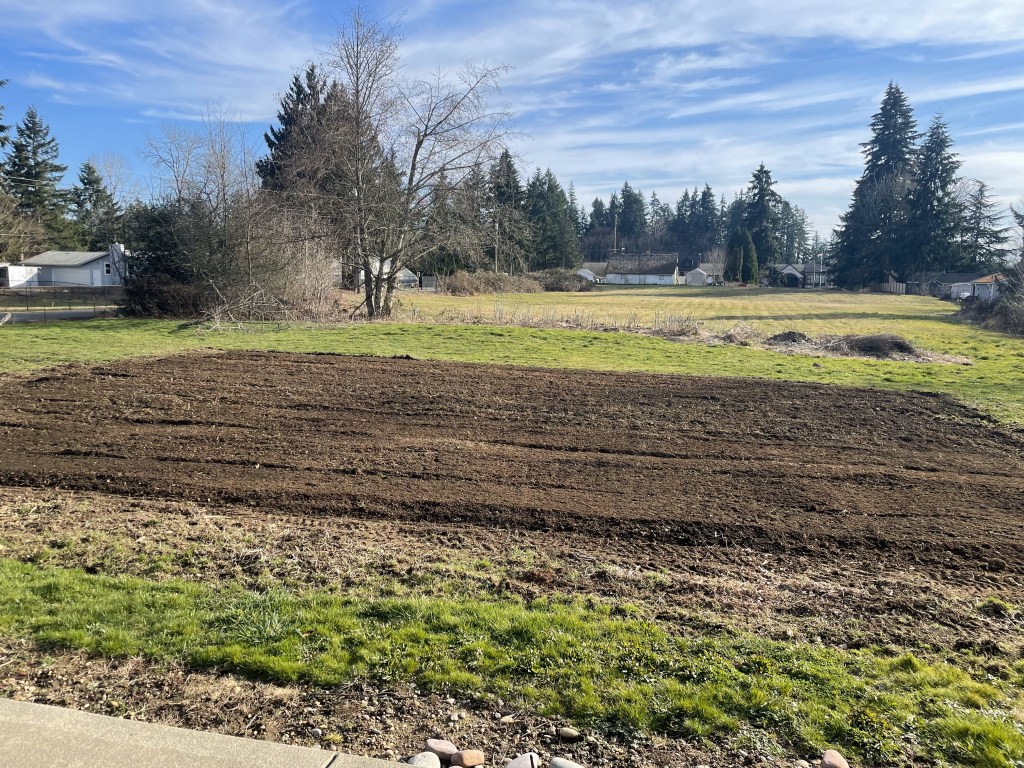
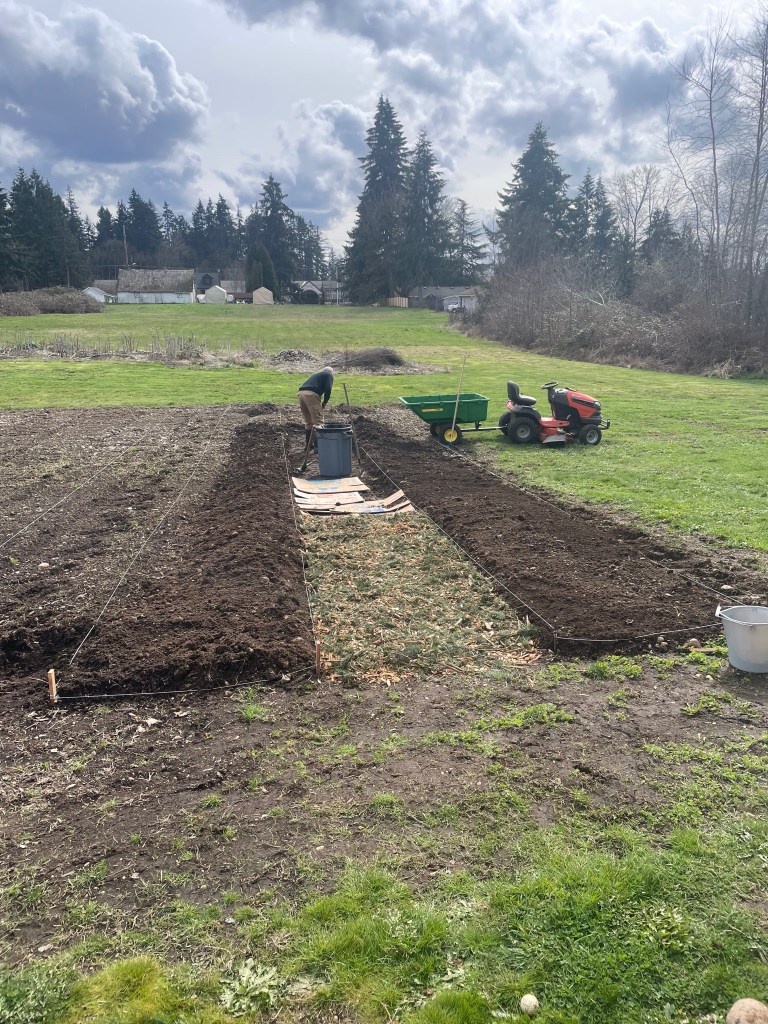
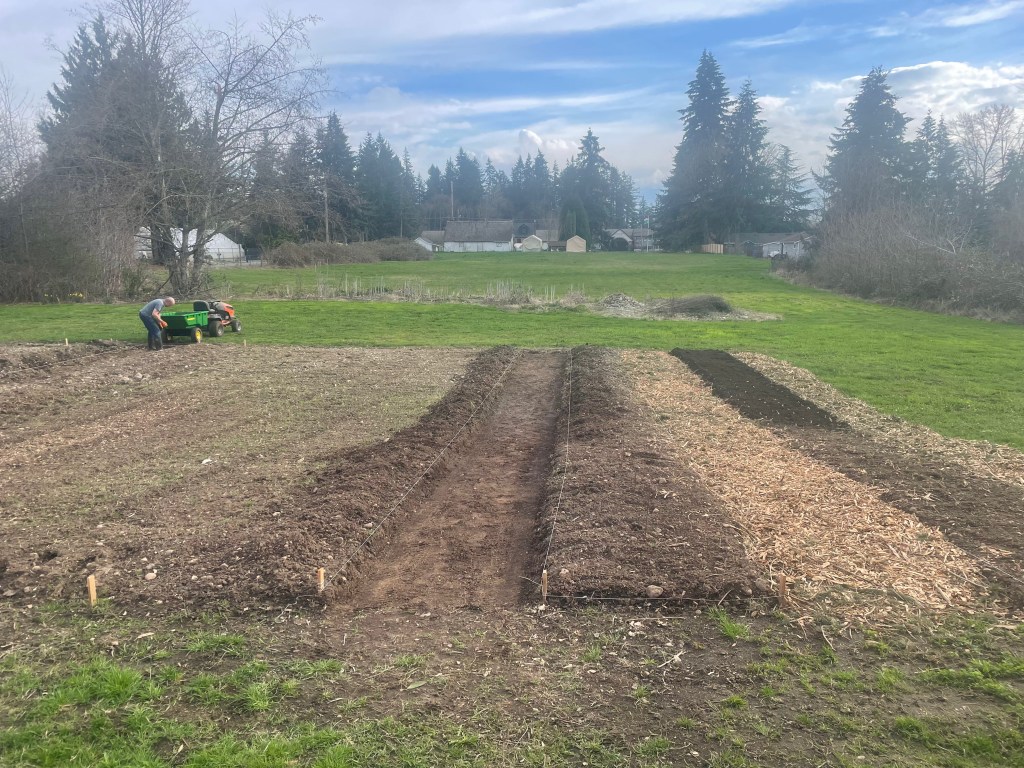
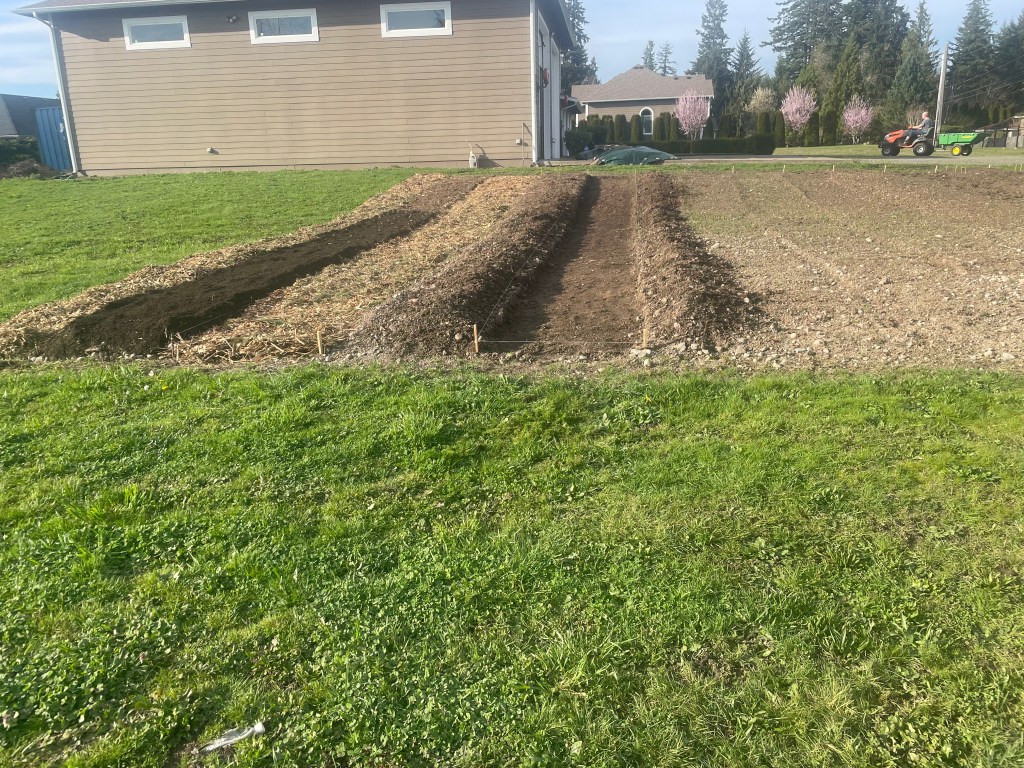
With the dirt tilled, we moved on to the next stage: digging out the paths and building up the beds.
Our plan is pretty straightforward: equal-width rows and paths. Garden rows where the plants go, paths where we don’t break our necks trying to harvest zucchini. We want thick, healthy beds and low-maintenance walkways, so we’re layering cardboard and piling on wood chips to keep the weeds in check (in theory).
Simple enough. Right?
How It Started
We began the noble way: by hand. Shoveling out the path areas and tossing that dirt onto the garden rows to build them up. It was slow, sweaty, and (if we’re being honest) pretty satisfying in a “we’re doing it ourselves!” kind of way.
…For about an hour.
Spring dirt is wet. And heavy. And not long after starting, we were rethinking our life choices.
How It Pivoted
Somewhere between shovelfuls, the smarter part of our brains kicked in:
Wait. Don’t we have a tractor?
We tried it on the end rows: shovel up the path dirt, drop it on the beds, re-till where the tractor flattened things… repeat.
It… kinda worked! It definitely worked on the first load of wood chips. Spreading a tractor-dumped pile of chips is way better than wheeling out 47 individual barrow loads.
We’re no longer spring chickens. We need to become strategic chickens. Honestly, that tractor is earning its keep.
Notes from the Trenches
- Turning path dirt into garden rows: 10/10 recommend
- Tractor digging > back pain
- Wood chips smell like progress
- We still have rocks. We will always have rocks.
What’s Next
- Finish building and filling the paths with chips.
- Finalize the planting plan.
- Stretch. Hydrate. Reconsider life choices.
- Start sowing early spring crops… I’m looking at you, sugar snap peas.
The garden is coming to life: one shovel, one wheelbarrow, and one hernia at a time.

Leave a comment